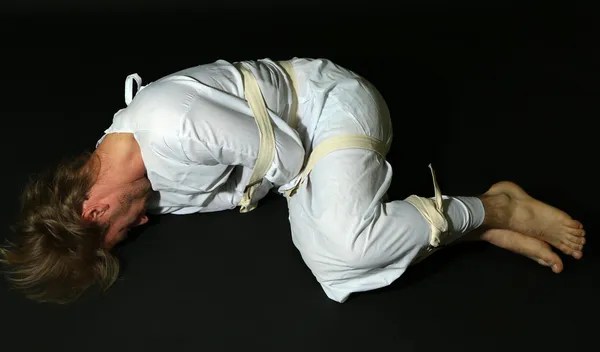
All truth passes through three stages: First, it is ridiculed; second, it is violently opposed; and third, it is accepted as self-evident. – Arthur Schopenhauer
‘My Body, My Choice’
The movement to secure a woman’s right to an abortion has relied heavily on the concept of bodily autonomy; neatly encapsulated by the slogan “my body, my choice”. The terms “pro choice” and “pro life” have come to refer universally to a person’s views on whether or not a woman should have the legal right to obtain an abortion. However, there is no more fundamental a matter of bodily autonomy than whether or not one is free, without undue interference from government authorities, to end one’s life. This is because, without the right to an abortion, you are forbidden from making one choice – ending the life of the zygote/embryo/foetus in your womb. But if you are denied the right to suicide; instead of being prevented from making one specific choice you are instead forced to endure all of the suffering and hardship that you would have avoided had the state stepped out of your way and allowed you to proceed with suicide in the most efficient, painless and risk-free fashion that modern medicine or technology will allow. Thus, by denying you this one choice; the society which will not permit you an easy exit is allowed to enslave you to its interests.
Because the term “pro choice” is normally used to refer to one’s views on an abortion; it is entirely possible for someone to call themselves “pro choice” and an ardent defender of autonomy, whilst vehemently opposing any kind of relaxation of the restrictions on suicide (an example of this is the well known proponent of the right to an abortion, Ann Furedi, who is an equally staunch opponent of the right to die).
In order to reconcile the contradictions in their viewpoints, these “pro choice” individuals often argue that it is inappropriate to frame suicide as a matter of choice; because as they see it, someone who is considering suicide is by definition irrational, unsound of mind, and therefore not able to make a reasoned choice at all. Therefore; far from suicide prevention being an infringement on autonomy, a society which seeks to make suicide difficult is one that is safeguarding that individual’s true interests and protecting the individual’s autonomy. The individual’s “true interests” will be defined as continuing to live either until natural death, or if they are fortunate enough to live in a nation with assisted dying laws; until they reach the arbitrarily defined threshold to qualify for medical assistance in dying.
Someone seeking to prevent suicide on paternalistic grounds will normally invoke the concept of mental illness. The typical argument is that suicidal ideation is caused by, or is a symptom of mental illness, and therefore by standing by and allowing the individual to end their own lives is, in effect, allowing them to be killed by a treatable disease, rather than offering them the cure. In this paradigm, an individual who attempts or completes suicide is presumed to have been acting without any agency of their own – they are passively killed by suicide in the same way that someone might be killed by cancer. Instead of being an expression of the way that their brain reacts to the hardships of life; the “depression” from which they are presumed to have been suffering is a malign external agency which controls their actions and overrules the wishes of the “authentic self” .
The “authentic self”, it is theorised, has an indefatigable zest for life, regardless of what the slings and arrows of outrageous fortune has in store for them. No matter if they have to work 60 hours a week at a job which makes them miserable and fills what little free time they do have with dread, merely in order to keep their head above water. A person acting in accordance with their true, authentic self will always choose life (at least up to the line where most people in that society would draw the line for eligibility for assisted dying); because even the slightest ambivalence in regards to the choice between life and death will always indicate the presence of a disease entity within their brain which has taken control of a person’s decision making faculties and has blinded them to their true desires and interests. The authentic desires and interests of any given individual, by happy coincidence, just so happen to align with the interests of capitalist societies to have a constant supply of labour; which also has an interest in being able to implicitly coerce people with the threat of unmet biological needs in the event that they are unable to keep up with the demands of their employer. Therefore, our society seems to be using the writings of Albert Camus as a template for what is deemed to be a “rational”, mentally healthy person.
The Naturalistic Fallacy and Suicide Prevention
For any theist, it is quite easy to reconcile the horrific ‘lived experience’ of life with the belief that life is nonetheless always worth living. The deity is the objective arbiter of goodness, and made the decision in their infinite wisdom to create living beings which can be harmed, knowing that, in terms of the big picture, it would all be worth it in the end. But as for us puny mortals, it is not possible for us to understand how our life of suffering fits in to the bigger picture (and therefore to attempt suicide would be to try and subvert God’s plans whilst not being in possession of all the facts); so it is incumbent upon us to have faith and let Jesus (or your alternative deity of choice) take the wheel.
However, if suicide prevention were the exclusive preserve of the devoutly religious, then we would expect to see liberal right to die policies across most of western and northern Europe. What we actually see is that even nations that are reported to have a majority atheist population, have yet to take even the first step towards respecting an individual’s sovereignty over their own life.
Much of this has to do with the fact that many self-identified atheists are still committing the naturalistic fallacy. Although they would explicitly deny that life was created by an intelligent designer; their attitudes towards life and death issues often tend to reflect an assumption that the natural forces which placed us in this position ‘know what’s best for us’. Such an atheist would readily accept that, if you placed a monkey at a typewriter, you would not expect it to produce the finest works of Shakespeare. But yet, they seem to have faith that the blind, unintelligent, unthinking forces of evolution have only ever been able to produce objectively good results; and can never produce results that a thinking and rational entity could ever reject.
The fact that a suicidal person must defy their survival instinct in order to end their life is taken as prima facie evidence that they are “not thinking straight”. But this argument assumes that our survival instinct was given to us by a designer who knew that our lives were always worth preserving, and therefore designed us with this safety mechanism which would make it psychologically difficult for us to end our lives. It makes no sense to assume that an instinct which was created by purely unintelligent forces, with no end goal in mind, would just so happen to always be perfectly aligned with our rational self interests. This is why, when I have been debating the subject of suicide online, I have tended to reserve my most withering scorn and derision for self-professed ‘atheists’ who remain staunchly pro-life on the issue of suicide, and reject that each individual has a rational interest in retaining easy access to an effective and humane suicide method.
Psychological Suffering Vs Physical Suffering
In Canada, despite a great deal of public outcry, assisted dying has been established for individuals with terminal illness (Track 1), and also those whose illness is not terminal, but causes grievous and irremediable suffering (Track 2). Expansion was scheduled to have occurred for patients suffering only with so-called ‘mental health’ difficulties; however this has been postponed a number of times; most recently until 2027; and these plans have generated fierce pushback from within psychiatry, as well as the usual coalition of ‘woke’ disability pressure groups and faith groups (see my previous post: https://schopenhaueronmars.com/2024/03/04/a-culture-war-maid-in-canada-the-religious-right-and-postmodern-left-unite-to-push-back-against-the-frontiers-of-bodily-autonomy/). In large part, this is because, whilst some have acceded to the idea that a person who is physically ill may be able to make a rational decision to end their lives; that the nature of psychological suffering is such that it would not be possible to be confident that the individual is able to make an informed choice. Indeed, many would argue that the very fact that they’ve been ‘diagnosed’ with a mental illness itself tautologically means that they are unsound of mind and therefore should not have the option of suicide available to them.
However, in both cases, the individual is requesting suicide because they are experiencing ongoing suffering, which is intolerable to them, and which has no guaranteed prospect of a cure. The only distinction that one can draw between the two groups is that so called ‘mental illness’ is heavily stigmatised and in the public mind, the concept of ‘mentally ill’ is still synonymous with ‘insanity’.
Therefore, people who identify as, or are ‘diagnosed’ as mentally ill are the only group in society that it is socially acceptable to discriminate against based on group membership.
It is also not necessarily true that a person on the verge of suicide is suffering from either an extreme of physical or of mental suffering. Whilst suicide prevention campaigns, such as in the Scottish suicide prevention video linked below tend to gravitate towards the trope of the weepy-eyed, ‘vulnerable’ (the favourite word of every suicide prevention campaigner) man who was too afraid to ‘open up’ to others about his mental health struggles (it’s important to show that it’s OK for men to cry too!);the threshold that will push a person towards suicide will vary between one person and the next.
This is because the threshold at which you decide to commit suicide will depend on how high of a value you attribute towards life itself. I will use myself as an example. I am suicidal not because I conform to the stereotypical mental health struggler depicted in the video above; but because I am an atheist who considers life to be the meaningless result of unintelligent forces, which by some fluke have combined to produce feeling entities that can suffer. Because life is a product of unintelligent design, there are no inbuilt guard rails or safety nets; and there is no mechanism which ensures that each of us only endures our own fair share of suffering. I’m not suicidal because I am suffering so intensely that I’m desperate to die this very minute. I am suicidal because I am keenly aware of the precarity of the situation of a sentient organism. To paraphrase the memorable analogy used by pessimistic Youtube philosopher inmendham; when we are born, we are thrust out onto a tightrope, whereby any mis-step or gust of wind can send us hurtling down towards the daggers and raging hell-fires beneath us. To my mind, it seems that no rational person would turn down the offer of a free insurance policy or safety net when engaged in something that has so much potential to go horrifically wrong, often due to no fault on our part. The suicide prevention advocate, on the other hand, believes that the lack of a safety net or insurance policy is itself an essential “safety” feature, and it would be unconscionably cruel and reckless to install a safety net to catch any that fall.
However, you can contrast the dispassionate cost-benefit analysis of a negative utilitarian like myself with a devout Catholic sufferer of Locked In Syndrome or ALS, who despite enduring unimaginable suffering, may have an unwavering commitment to life, because they believe that their life was created in God’s image, and that they are an irreplaceable part of God’s plan for the universe.
It is clear that it will always be the person who chooses to live who will be assumed to have made a decision with a calm and rational mind; even if the person who chooses life is heavily influenced by their primal survival instinct, and rationalises this after the fact by constructing a religious narrative of meaning and purpose in order to justify the decision that they were already heavily inclined towards.
As an atheist, I believe that the only real value which exists in the universe is the value of feelings, because this is the only form of value that I am aware to have been directly observed. I know that sentient beings are vulnerable to negative feelings, and that whilst good feelings are positively valenced, a non-existent entity (regardless of whether an entity once existed) has no desires and therefore cannot be deprived of pleasure. The devout religious person does believe in a form of absolute value that has never been observed nor proven. Yet, in this scenario, it will invariably be the atheist who is deemed to be making a judgement about life based on faulty evidence and a distorted perception of reality. It will be the atheist who will be patronisingly labelled “vulnerable” and forcibly “protected” from their own philosophical views, lest they let on to anyone that they have plans to act on them; even though nobody would be able to explain why the atheist is mistaken about their own rational welfare interests, or the best way to go about protecting them. The best that they would be able to manage would be a thought terminating cliche: “death is the ultimate harm”; or manipulate language in order to contrive all manner of abstract ‘harms’ that might bother the people left behind, but of which the deceased would be unaware: https://schopenhaueronmars.com/2023/01/30/death-is-not-bad-for-you-refuting-the-deprivation-account/)
The Gamble of Life
Most opponents of suicide would consider suicide to be the paradigmatic example of irrational behaviour. Let’s compare and contrast this to another example of behaviour that would be widely regarded as irrational: addiction. To illustrate, I will hone in on the specific example of gambling.
Those who have a long term gambling habit are generally considered to have an unhealthy, problematic, and even ruinous problem. This is because, whilst it is possible to reap great gains in the short term; we know that, statistically, ‘the house always wins’ in the long run. Thus, a gambler who was only myopically fixated on the possibility of a big win, whilst ignoring the far greater probability of meeting financial ruin would be considered to have a serious psychological problem. We would implore such a person to seek help in order to curb their addiction.
However, when it comes to the rejection of life, this logic is turned entirely on its head. Even a person who has suffered their way through a 50 year losing streak is considered to be suffering from distorted, clouded thinking, or ‘tunnel vision’ if they doubt the prospect of a sudden radical and persistent change of fortunes. If the individual in question had an incurable physical medical condition that was causing them unbearable suffering, as opposed to a supposed mental health condition; then at a certain point, it would be considered reasonable for them to be pessimistic regarding the prospects of their suffering becoming tolerable in the future. However, in the case of the ‘mental illness’ any such pessimism about their future would only serve as further confirmation that the individual’s perspective is clouded and distorted, and that they therefore need to be protected from their disordered thoughts. The popular suicide prevention slogan is “it gets better”; not “it might get better”.
The analogy to gambling is particularly apt here, because the psychological forces that propel us forward into the future can be accurately be described as forms of addiction. The short moments of reprieve from the misery of the 5 day working week are held out in front of us – like horses chasing a carrot on a string – are what keep us moving forward. It is also our addictions that keep the human race moving forward into the future. Procreation works through a process of creating a sensation of discomfort in a man; and the best and most desirable way of alleviating this discomfort is also the mechanism whereby we transmit our DNA into the future.
As we can see that gambling does not address the underlying problem that an addicted individual has, we can conclude that it does not align with their rational self interests; and therefore is not a rational act. However, I have yet to come across any cases of anyone being sectioned under the Mental Health Act on account of a gambling habit.
The reason that someone may choose suicide to solve their problems is because as suicide prevention activists themselves are fond of pointing out – suicide is a permanent solution.
Conclusion: Unveiling the True Motives for Suicide Prevention
Referring back to the Schopenhauer quote at the top of the article; the idea that suicide can be a rational act seems to be stuck somewhere between stages 1 and 2, with frightened and hidebound opponents of suicide determined to control the media narrative concerning suicide, and eliminate every other perspective.
On the UK’s Channel 4, a recent 2 part documentary: Poisoned: Killer in the Post investigated the case of Kenneth Law; a Canadian man who is currently facing charges of first degree murder for the act of supplying ‘suicide kits’ to buyers throughout the world. Unsurprisingly, journalist James Beal’s treatment of the subject matter was sensational and unbalanced. The vendor of the suicide kits was branded as a “murderer” and accused of “playing God” by the relatives of the deceased, interviewed by the documentary. Therefore, by implication, those who received the packages (after actively deciding to search for effective suicide methods and then waiting for the product to arrive in the post from abroad) and went on to use them were the vulnerable victims, who acted without agency and were helpless to avoid dying. As far as Mr Beal and the relatives of the deceased were concerned, this was in effect no different than if Mr Law had randomly and maliciously mailed packages of anthrax to them without any prior communication.
The documentary maker made no attempt to seek out an alternative point of view for balance. No pro-choice bioethicist was interviewed. None of the suicide forum users were interviewed to explain why they felt that they were being infantilised by efforts to restrict what substances they are allowed to buy online for their own personal consumption. Instead, as is invariably the case, paternalistic suicide prevention was presented as being an incontestable moral good.
As a result of the campaigning efforts of the family members featured in the Channel 4 documentary amongst other family members bereaved by suicide, the UK government has also extended its Online Safety Bill (originally intended to be used to protect children) so that suicide related content is deemed a “priority offence”, which platforms are required to block before they can reach users – even if these users are grown adults; thereby further entrenching the idea that; just like a 2 year old child who doesn’t understand why they shouldn’t ingest household bleach; all people considering suicide are incapable of moral agency.
But why stop at online “safety”? An adult who is unable to access suicide related content online will be able to visit any library with an expansive philosophy section; and with a little bit of searching, there they will be able to discover arguments which may risk validating their suicidal thoughts and propel those vulnerable NPCs, zombie-shuffling, towards their own premature demise (if they can still somehow manage to gain access to anything more lethal than a butterknife). Therefore, why not stage book-burning ceremonies outside libraries, bookshops and book warehouses throughout the country in order to purge our society of this “unsafe” wrongthink?
The crusade of these family members to subject the entire UK population to parental controls on their Internet viewing reveals the tendency to look for someone to blame; and looking to deflect their anger away from the people that they have lost. They wish to rationalise to themselves that their loved one did not ‘selfishly’ abandon them. But perhaps most of all, they seek a way to be able to justify exerting the ultimate control over their loved ones, whilst being able to tell themselves the entrapment to which they seek to subject their loved ones is a protective and caring act, as opposed to an act of the most unspeakable cruelty and selfishness.
At the same time that the UK government is clamping down even more aggressively on access to suicide related content online, an assisted dying bill is passing through UK House of Lords. This bill, if it ever becomes law, will allow assistance in dying to those who have been diagnosed with a terminal illness and are in the last 6 months of their life.
As opponents of the bill never cease to point out; it is rather telling that the bill sponsors chose to describe the activity of ending life as “assisted dying” as opposed to “assisted suicide”. This is because, even in the attempt to take the first step towards liberalisation of the law; the sponsors are still afraid to challenge the assumption that “suicide” is something that is undertaken only by those who are irrational and lack soundness of mind.
Were the bill to fail at its final hurdle, however, the very people who would have become eligible to be assisted to die under the new law will continue to be subject to the same infantilising suicide prevention policies as the rest of the population. A person with stage 4 cancer (were they to be unable to afford the fee for a Swiss clinic) would meet with the same barriers that face a 15 year old child who is heartbroken after breaking up with his first girlfriend.
To be sure, the irrationality of suicide is not the only argument that proponents of the right to die have in their arsenal. There are a range of other arguments that may be employed. However the presumed irrationality of suicide is the keystone of the case in favour of suicide prevention, because this is the only argument in the preventionist arsenal that allows them to silence and discredit all voices of dissent.
Concepts such as “sanity”, “soundness of mind” and “rationality” are amorphous enough that the majority can choose to define those concepts in such a way as to license restricting the liberties of a minority, even if they cause immense suffering in doing so.
Once the “irrationality” argument fails; then this necessarily entails a conceptual shift whereby suicide prevention ceases to be seen an act of protection, and starts to be seen an act of enforcement. Once this shift is underway, we are forced to reckon with much more morally fraught questions regarding the extent of an individual’s obligations towards the collective, during which hypocrisies and inconsistencies start to become exposed.
It is therefore essential that proponents of the right to die, and anyone who is open minded towards the idea of a right to die, insist that the debate must be characterised by fairness and integrity.
For those with sincere (rather than self-interested or disingenuous) concerns about the rationality of suicide attempts; perhaps they may be open minded to alternative ways of addressing this, without the need for the blanket restrictions which exist at the moment. In one of my earlier posts, I advance the case for a negative liberty right to suicide, which could be made subject to a waiting period of around a year.
If proponents of suicide prevention genuinely believe that all suicidal people can be fairly described as lacking the capacity for reason; then it should be trivially easy for them to engage with us directly, and in doing so, expose the alleged gaping holes and distortions in our reasoning. It should no longer be considered acceptable to dismiss our arguments on the basis of assumptions that are being made about us as people, as opposed to the merits of our arguments.
Thank you for reading! If you enjoyed this post, please check out my other posts at schopenhaueronmars.com , follow me on X (@existentialgoof), Reddit (https://www.reddit.com/user/existentialgoof/) consider subscribing below, in order to receive updates when new content is released. Alternatively, if you have any comments, please leave them below.
8 responses to “On the Rationality of Suicide”
-
Hi existentialgoof
you commited in the paragraph to
“This is because the threshold at which you decide to commit suicide will depend on how high of a value you attribute towards life itself. I will use myself as an example. I am suicidal not because I conform to the stereotypical mental health struggler depicted in the video above; but because I am an atheist who considers life to be the meaningless result of unintelligent forces, which by some fluke have combined to produce feeling entities that can suffer. Because life is a product of unintelligent design, there are no inbuilt guard rails or safety nets; and there is no mechanism which ensures that each of us only endures our own fair share of suffering. I’m not suicidal because I am suffering so intensely that I’m desperate to die this very minute. I am suicidal because I am keenly aware of the precarity of the situation of a sentient organism“
However, you did not committed(you are still alive, aren’t you) or going to commit suicide which obviously contradicts your last statement.
Did I misunderstand you? Not all suicidal person commit suicide , its a definition misunderstanding ?Is it certain threshold of suffering valuable for you which keeps you going? I noticed you engaged up to a point with Benjamin on a thread on his blog for some topics related to the subject.
LikeLike
-
I’m still alive because I don’t have a binary choice between living and dying, and have never had this choice, due to restrictions on access to reliable and humane methods. The only choice that I have is to take a risk which could result in my death, but could also result in profound, lifelong disabilities. If I had access to an instantaneous and painless method, and yet still chose to live, then you’d be entitled to question my convictions. But to say that I must be insincere in my philosophical views because I haven’t risked these catastrophic outcomes is a bit like saying that a prisoner isn’t having their freedom restricted because they haven’t escaped yet.
LikeLike
-
Would the author not commiting even if there was a “proper” way of doing so devalue his arguments?
LikeLike
-
Which arguments are you ?
I mostly see personal opinion and no philosophical or ethical ones backed by personal commitment.
I raised the Post since he start interacting with Benjamin and somehow got stopped, hoping the exchange will continue fruitful onwards:
http://rantswithintheundeadgod.blogspot.com/2021/11/is-having-children-always-wrong.htmlLikeLike
-
-
-
excellent, thank you very much.
LikeLike
-
Thank you. Very much appreciated.
LikeLike
-
-
Even though I consider there is a lack of consistency between the rational way of thinking that modern societies say they act upon and the suicide rights these same societies offer to their citizens, I cannot agree with the emotional interpretation of the lack of meaning when applied to logical thinking about suicide. When the reasons that seem to move the balance toward suicide are not physical impossibilities —for example, paraplegia or terminal disease— but come from a social context, I think you can use the lack of meaning to both justify and deny suicide. For example, if you are trapped in the capitalist system that enslaves you to 60 hours of work just to keep a roof over your head, everything around you just makes your existence pure suffering, and on top of that there is no meaning or value to this thing called life, of course suicide seems valid. But also, if life has no meaning or value, then all the possible ties and relationships that anchor you to that spot in the system lack meaning or value as well. Therefore, it is just as valid to stop the suffering by suicide as it is by leaving everything behind —with the difference that suicide also removes the possibility of joy.
LikeLike
-
Thanks for your response to the article. I am confused with your claim that by allowing suicide, we render relationships meaningless. They can still be meaningful to the person who dies by suicide; but the person may just decide that they aren’t willing to live purely for the sake of others, as much as they might be pained by the fact of the suffering that their death may cause.
Whilst you may see the radical collectivist view (we come into existence as the property of society, bound by an unbreakable obligation that we didn’t consent to) as being equally “valid” as individual autonomy; every individual is at risk of finding themselves in a situation where they are desperate for the way out. Those supporting the collectivist view just take it for granted that they’ll always be the ones exploiting others.
Suicide removes the possibility for joy; but a cadaver is no more deprived of joy than their coffin. Joy is valuable for sentient organisms because it is desirable, and the absence of it will cause suffering. But the fact that there isn’t any joy on Mars doesn’t constitute a problem.
-


 Schopenhauer on Mars
Leave a reply to existentialgoof Cancel reply